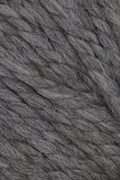
The yarn
A felted bag needs wool that has not been treated to resist felting: 100% wool with no superwash on the band, or wool blended with mohair or another animal fiber. Nothing else works. Superwash wool, cotton, acrylic and anything with more than about 20% of them will come out of the hot wash the same size it went in, only limp. The which yarns felt guide has the full list of what does and does not.
Within the wools that felt, some make better bags than others:
- Wool with mohair felts fastest and densest, and the mohair halo hides the stitches completely. Brown Sheep Lamb's Pride, 85% wool and 15% mohair, is the yarn most American felted-bag patterns were written for, and the one to choose for a bag that has to hold its shape empty.
- Icelandic wool — Álafoss Lopi — is a loose single that felts quickly into a stiff, hard-wearing fabric with a slightly hairy surface. It is the cheapest route to a sturdy bag.
- Plied worsted wools — Nature Spun, Top of the Lamb, Mercado, Hearty Homestead — felt a little slower and come out smoother and more even, which suits a bag with a design or stripes.
- Single-ply merino — Malabrigo Worsted, Reggae — felts fast and very soft. A merino bag is lovely to touch and slightly floppier than a mohair-blend one.
- Self-striping wool — Noro Kureyon, Reggae Ombre — turns into blurred bands of color when felted. The classic striped felted tote is Kureyon held double.
Color matters. Dark and heathered wools felt readily; white and the palest shades are often bleached in processing and felt slowly, sometimes not to the same size as the dark wool next to them. If you want a white stripe on a navy bag, felt a swatch of both together first — and expect some navy to bleed.
Our free pattern, in numbers
Our Easy Felted Bag is a good first one because it is a rectangle knit in the round with two cut handles, and it shows how the sizes work:
| Length | Width | |
|---|---|---|
| On the needles | 18" | 18" |
| After felting | 13" | 14½" |
| Shrinkage | 28% | 19% |
Length shrinks more than width: the rows close up more than the stitches do, and nearly every felting pattern shrinks in roughly this proportion, which is why a bag looks absurd on the needles.
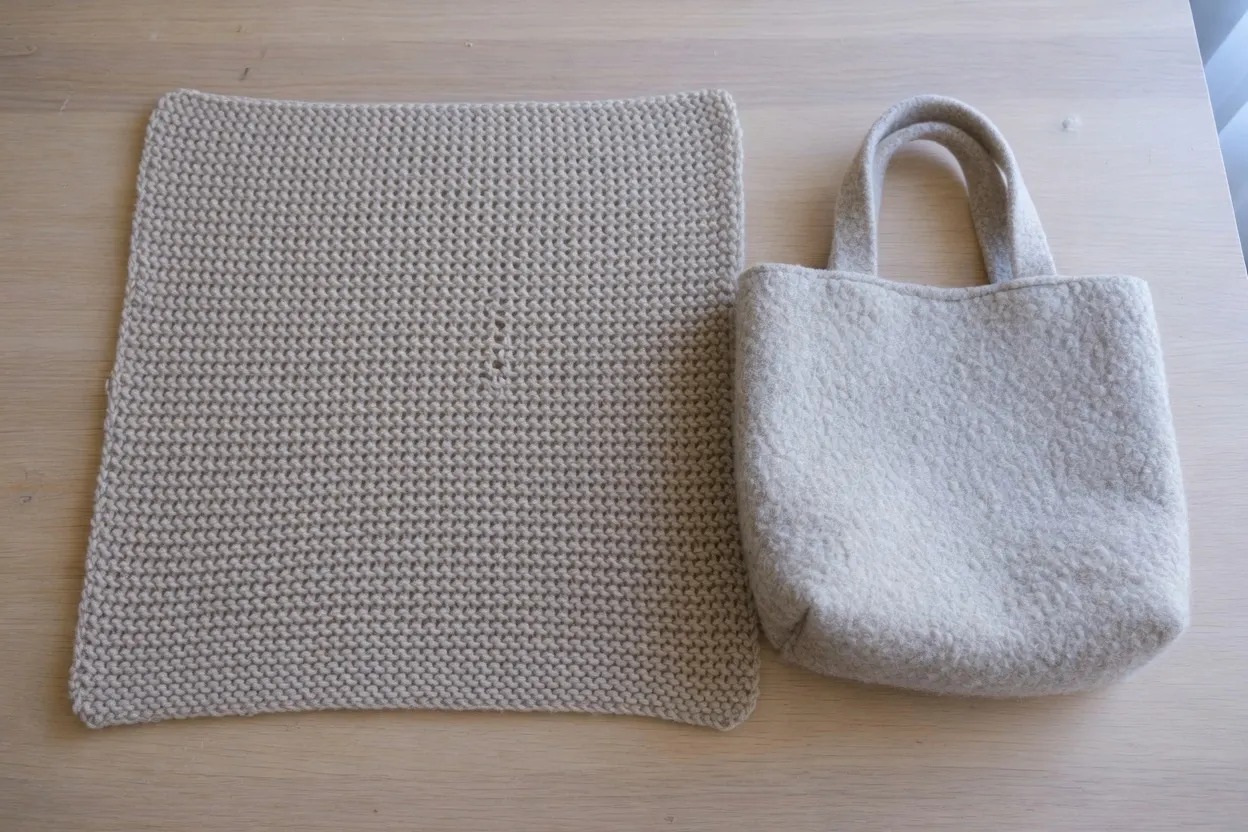
On the needles
18" long and 18" wide.
After felting
13" long and 14½" wide.
It calls for three 100 g skeins of chunky feltable wool, about 330 yards, on a US 13 40" circular. On our shelves that is:
Counts below are the pattern's three skeins plus the spare skein you should always buy; three skeins of Lopi is 327 yards, which is too close for comfort.
- Álafoss Lopi, 109 yards to the skein: four skeins, $52, the closest match to the pattern.
- Plymouth Hearty Homestead, 123 yards: four skeins, $50, a smooth plied wool.
- Lamb's Pride Bulky, 125 yards to a 113 g skein: four skeins, $76, for the densest, fuzziest result.
- A worsted held double. Two strands of Lamb's Pride Worsted, Nature Spun, Top of the Lamb or Malabrigo Worsted knit on US 13 give the same chunky gauge. You need about 660 yards plus the spare: five skeins of Lamb's Pride Worsted or Malabrigo Worsted, four of Nature Spun. Kureyon held double takes eight balls and gives you the striped bag.

How much yarn a felted bag takes
More than its finished size suggests. You knit the piece roughly two-fifths longer and a quarter wider than it will end up — our bag goes on the needles at 18" × 18" to finish at 13" × 14½" — so the fabric you knit has about one and three-quarter times the area of the bag you carry, and you knit it loosely on big needles, which takes more yarn per inch than a firm fabric. That finished 13" × 14½" tote in chunky wool is 330 yards; the same bag in worsted held double, twice that.
Trust the pattern's yardage over any rule of thumb, divide by the yards in a skein, round up and add one. Buy every skein from the same dye lot: felting blurs colors a little but it does not hide a band where the lot changed. Every yarn page here shows the dye lot you will get.
Needles and gauge
Felting wants a loose fabric. Knit two or three needle sizes larger than the ball band suggests — US 13 for a chunky wool, US 11 to 13 for worsted held double — so that light shows through the stitches. A tight fabric felts slowly and unevenly because the fibers cannot move against each other.
Gauge before felting hardly matters; gauge after felting is the whole game. The only reliable way to know the finished size is to knit a 6" swatch, measure it, felt it exactly as you will felt the bag, and measure again. Two swatches in a new yarn cost one evening and save a bag that comes out the size of a lunch box.
Knit in the round where you can. Seams felt thicker than the rest and show as ridges; a bag knit flat and seamed needs the seams grafted or sewn very flat.
Felting it
A top-loading washing machine is the easiest tool because you can open the lid and check. A front loader works too, but you cannot stop it mid-cycle, so run short cycles and check between them.
- Put the bag in a zipped pillowcase or a mesh laundry bag. Felting wool sheds a startling amount of fiber, enough to clog a pump.
- Hot wash, lowest water level, a teaspoon of wool wash or dish soap. Add a pair of old jeans or a couple of towels for agitation; nothing that sheds lint of its own, and nothing white.
- Check every five to ten minutes. The stitches blur, then disappear. Stop when you can no longer see individual stitches and the measurements are close — it keeps shrinking a little as it dries.
- Skip the spin if you can, or spin briefly; a hard spin sets creases. Rinse in cold water by hand.
- Pull it into shape while wet, stretch the handles to length, and stuff it with towels or stand it over a box of the right size. Dry away from heat. It takes a day or two.
One to four cycles is normal. A pale wool or a tightly plied one may need every one of the four.
A felted bag will not shrink further unless it meets hot water and agitation again, so spot-clean it. If it comes out slightly too big, another hot wash takes it down; too small cannot be undone.
After felting
The felt can be cut like fabric without unraveling, which is what makes a felted bag so forgiving: trim a wobbly top edge straight, cut a slot for a magnetic snap, cut handle holes instead of knitting them. A lining is optional on a mohair-blend bag and a good idea on a merino one. A sweater shaver tidies the surface; a stiff brush raises a halo on Lamb's Pride if you want one. Needle-felted shapes in a contrasting wool stick permanently to the felted surface, no sewing.