Four claims, not one
Organic fiber is about how the plant was grown or the animal was raised. Organic cotton is grown without synthetic pesticides or fertilizer and, under the GOTS standard most mills use, processed and dyed under rules for water and chemicals too. Organic wool comes from flocks raised to an organic standard: certified pasture and feed, no synthetic dips or routine antibiotics. Cotton is the fiber where it matters most, because conventional cotton is one of the most sprayed crops in the world.
Recycled fiber is about where the fiber came from: cut-room waste, old garments or plastic bottles, re-spun. It saves growing or making new fiber; it does not say anything about how the original was grown.
Undyed fiber is about what was left out. A yarn sold in the natural shades of the fleece — white, fawn, brown, gray — has skipped the dye bath entirely, which is the dirtiest step in making most yarn.
Natural fiber at all is the quiet one. Wool, cotton, linen, alpaca and silk grow back and rot down. Acrylic and polyester are plastic: they do not biodegrade and they shed microfibers with every wash. A plain wool sweater, unlabeled, is already on the greener side of the shelf, and a sweater worn for ten years is greener than any certificate.
What a certificate covers
A certification covers the farm and usually the mill — not the shipping, not the ball band, not what happens after it is yours. An organic cotton can still be dyed with a strong color; an organic wool can still be superwash, and the superwash coating is a polymer. If the processing matters to you, look for a GOTS mark, which covers it, rather than the word organic alone; and look for the care instructions, since a yarn that needs dry cleaning carries its own footprint.
The organic lines
Organic cotton is the deepest shelf. Blue Sky Fibers makes three: Organic Cotton, a soft worsted (150 yards to 100 g, 26 colors, $19.50); Organic Cotton Sport, the same cotton lighter (136 yards to 50 g, 16 colors, $10); and Printed Organic Cotton, the worsted with a printed color (8 colorways). Juniper Moon Cotton+Merino is 70% organic cotton with 30% merino, a worsted that holds a rib better than any pure cotton because of the wool (229 yards, 33 colors). Juniper Moon Bud and Bud Dappled are organic cotton spun thick and thin into a slub, a chunky for a fast summer top (109 yards, 45 colors between them). Schoppel Zauberball Crazy Cotton is self-striping organic cotton at DK. Araucania Confeti is hand-dyed organic cotton at DK (360 yards, $21.50). Blue Sky Sweater pairs 45% organic cotton with superwash wool for a machine-washable worsted.

Organic wool is thinner on the ground, here and everywhere. Juniper Moon Santa Cruz Organic Merino is a 100% organic merino worsted, down to its last two colors. Plymouth Homestead, a 100% wool worsted at $13.50, and Zitron's Feinheit and Form & Farbe, a superwash fingering and a super bulky, are the other lines on the organic shelf.
The recycled lines
Berroco Remix Light is the one to know: a DK blend of cotton, nylon, acrylic, silk and linen made entirely from recycled fiber, 432 yards to 100 g, machine washable, $13.85, and the cheapest sweater on this page. Artyarns Cashmere Eco is half recycled cashmere and half new, a hand-dyed DK at $43.50 for 164 yards. HiKoo Popcycle is a fingering of bamboo viscose and polyester spun from recycled bottles, for summer shawls.
The undyed lines
Berroco Ultra Alpaca Natural is the undyed version of Ultra Alpaca, half alpaca and half wool in the animals' own shades, 219 yards to 100 g at $15 — a sweater for $105 in a color no dye house touched. Plymouth Alpaca Lino, alpaca with linen, and Noro Haunui, a 100% wool worsted, also sit on the eco-friendly shelf, along with Schoppel Cotton Ball, a fingering-weight cotton.
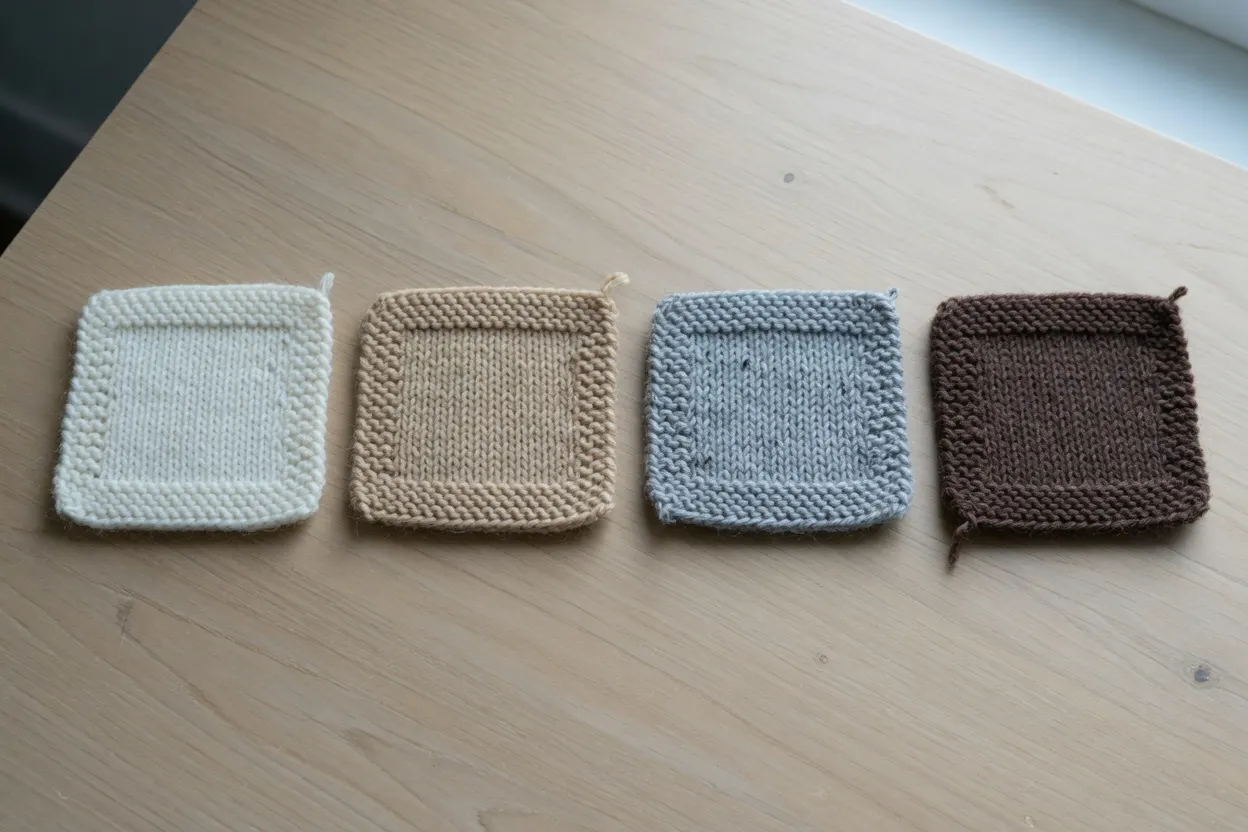

Choosing
Decide which of the four you mean. If it is pesticides and water, buy organic cotton. If it is landfill, buy recycled or buy wool and wear it out. If it is chemicals in the dye bath, buy undyed or look for GOTS. If it is plastic, avoid acrylic and nylon — though 20% nylon in a sock makes it last three times as long, which is its own kind of saving.
Then buy enough. Running out and reordering, or knitting a garment that does not fit and sits in a drawer, undoes more than any label. The sweater yardage guide and the calculator on every yarn page get the count right the first time.
Care
Natural fibers last longest when they are washed least. Air a wool sweater instead of washing it; wash cotton cool and dry it flat; keep moths out of wool with a sealed box and a lavender sachet, not a chemical. The care guide has the rest.


