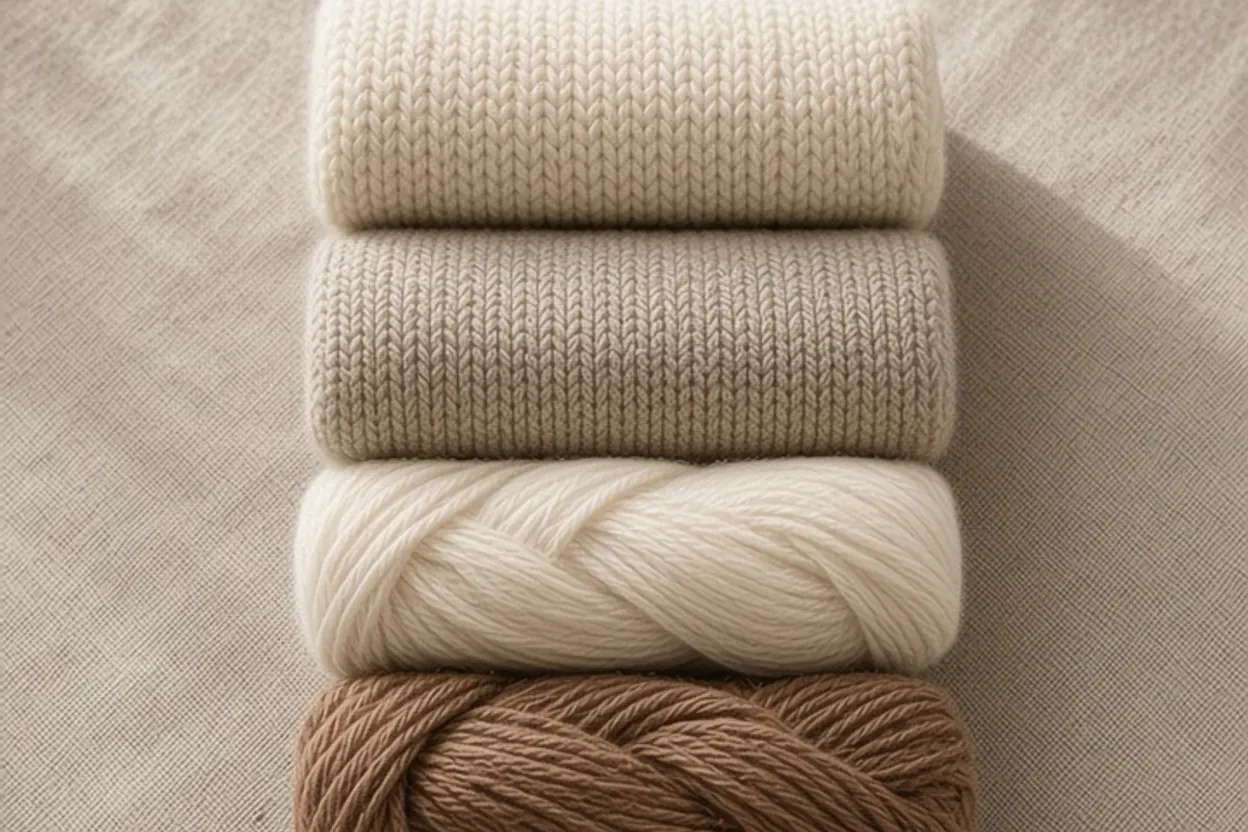
Why summer yarn is different
Wool fiber is crimped and elastic: it springs back when stretched, so ribbing stays ribbed and a sweater keeps its length. Plant fibers are straight and have no spring. A cotton garment grows with wear and does not recover, linen creases, and neither forgives a loose gauge. The flip side is that plant fibers are cool, take dye crisply, machine wash well and never itch. Knit them a little more firmly than you would wool, trust the swatch after it has been washed and hung, and choose patterns with structure — a textured stitch, a yoke, a seam — over long unsupported drape.
Cotton
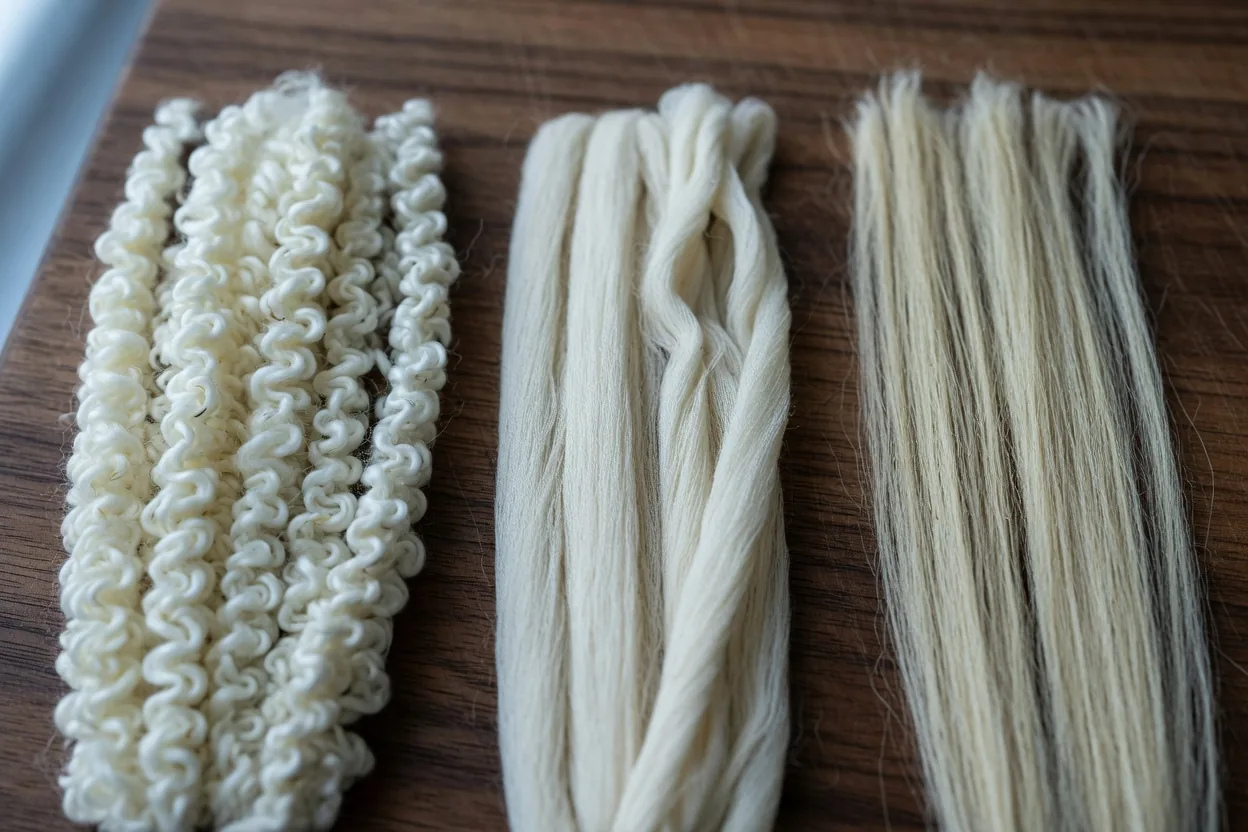
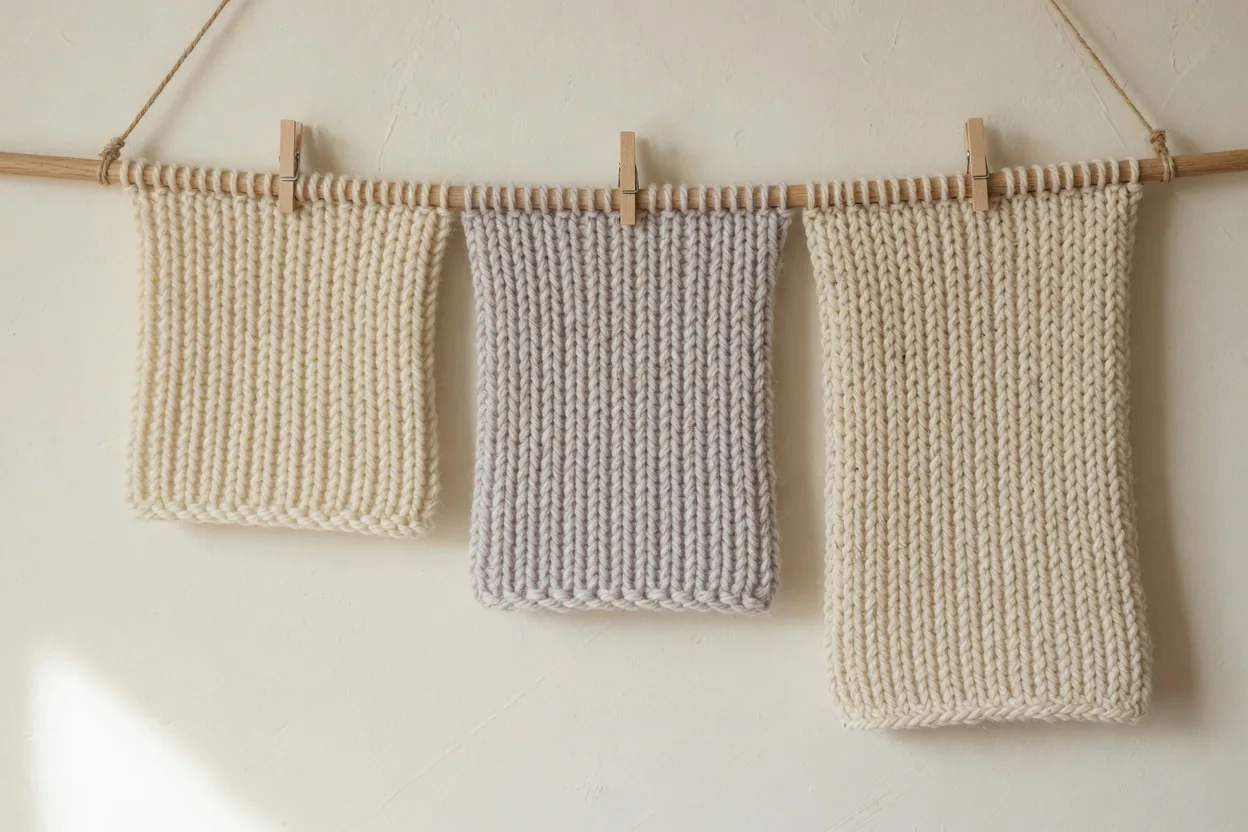
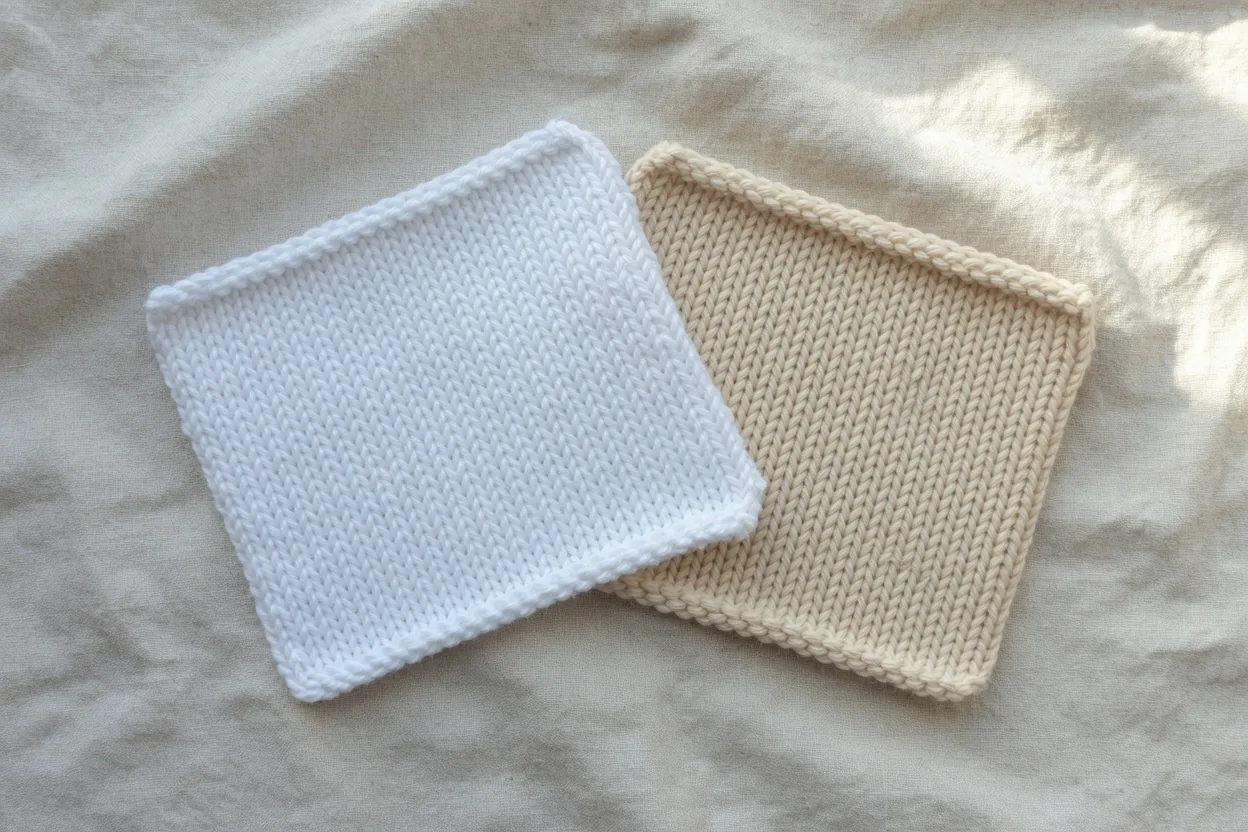
Cotton is heavy for its yardage and has no memory. Mercerized cotton is smooth and shiny and shows every stitch; matte and organic cottons are softer and more forgiving. The lighter constructions knit up lighter and drape better than a plain plied cotton, which is why they make the best summer sweaters: a chainette is a hollow tube, and a blown yarn such as Juniper Moon Cumulus is a fine nylon mesh filled with cotton. Blue Sky's organic cottons are the classic for baby things and for a dense, cool tee. Malabrigo Verano brings Malabrigo's hand-dyed color to a pima cotton DK. Cotton machine washes; dry it flat or it will stretch under its own weight.
Plied
Twisted strands. Solid, and heavy for its thickness.
Chainette
A hollow tube. Light, because of the air in the middle.
Blown
A mesh filled with loose fiber. Light, and soft.
Linen and hemp
Linen is the one summer fiber that gets better every time it is washed. On the needle it feels like string; after a wash and a tumble in the dryer it softens, and after ten washes it is the best thing you own. It drapes rather than clings, so it suits loose tops, tanks and shawls more than fitted garments. Pure linen — Schoppel El Linio — is for people who already love it. Cotton-linen blends such as Juniper Moon Zooey are the easy way in: the cotton softens the hand on the needle and the linen gives the finished fabric its drape and cool. Hemp behaves like linen; Elsebeth Lavold Hempathy blends it with cotton and modal into a soft, inexpensive DK.
Blends with wool
A wool-cotton blend is the answer for the knitter who wants cotton's cool and wool's memory in one garment. Blue Sky Fibers Sweater (superwash wool and organic cotton), Brown Sheep Cotton Fleece (cotton and merino) and Juniper Moon Cotton+Merino (organic cotton and merino) all hold a ribbing and still feel like a summer sweater. Noro Kakigori and Tsubame put silk into the mix for the same reason, with Noro's color.
What we stock, by weight
Fingering
DK and sport
Worsted
Chunky
- Fingering: Araucania Huasco Coton (hand-painted cotton), Schoppel Cotton Ball, HiKoo CoBaSi (the summer sock yarn) and Popcycle.
- DK and sport: Juniper Moon Zooey, Zooey Stripes and Zooey Spray; Araucania Prisma and Confeti; Malabrigo Verano; Blue Sky Organic Cotton Sport; Hempathy; El Linio and Alb Lino (linen); Berroco Remix Light; Zauberball Crazy Cotton; Noro Kakigori and Tsubame; Brown Sheep Cotton Fleece.
- Worsted: Juniper Moon Cumulus and Cumulus Rainbow; Blue Sky Organic Cotton, Printed Organic Cotton and Sweater; Cotton+Merino; Noro Haunui Cotton.
- Chunky: Juniper Moon Bud, a slubbed cotton for a fast summer top or a bath mat.
The spring & summer shelf is the whole set; cotton and linen are the fiber views.
How much, and what it weighs
Plant fibers are denser than wool, so a 100 g skein holds fewer yards — Blue Sky Organic Cotton is 150 yards to 100 g where a worsted merino is 210 — and a sweater takes more skeins and weighs more. Count by the pattern's yardage, not by skeins, with the calculator on each yarn page, and if the pattern was written for wool expect the cotton version to hang an inch or two longer. The sweater yardage guide has the totals.
Care
Machine wash cool on a gentle cycle unless the band says otherwise; most cottons and all our linens take it. Dry flat for cotton, which stretches when hung wet; linen can be tumbled on low, which is exactly what softens it. Block cotton and linen by wetting and laying out to measurements — neither will hold a shape that was pinned into it dry.


