The chart
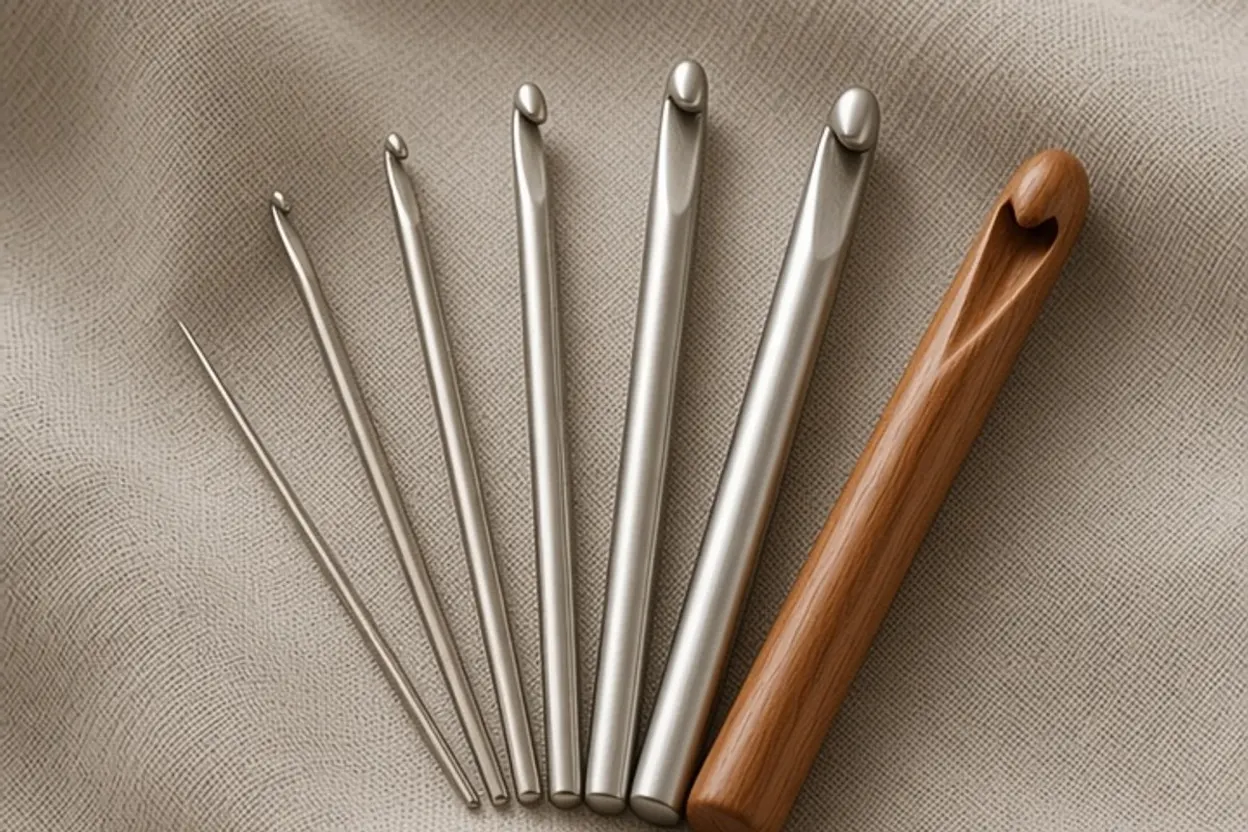
The millimeters are the diameter of the hook's shaft, which sets the size of the stitch, exactly as they do for knitting needles (the needle size chart is the other half). The US letter and number are names for it, and the Craft Yarn Council's version of the names is the one most American patterns use.
| US letter / number | mm | Yarn it usually works |
|---|---|---|
| B-1 | 2.25 | Lace, fingering |
| C-2 | 2.75 | Fingering |
| D-3 | 3.25 | Fingering, sport |
| E-4 | 3.5 | Sport |
| F-5 | 3.75 | Sport, DK |
| G-6 | 4 | DK |
| 7 | 4.5 | DK, light worsted |
| H-8 | 5 | Worsted |
| I-9 | 5.5 | Worsted |
| J-10 | 6 | Worsted, aran |
| K-10½ | 6.5 | Chunky |
| L-11 | 8 | Bulky |
| M/N-13 | 9 | Bulky |
| N/P-15 | 10 | Super bulky |
| P/Q | 15 | Jumbo |
| S | 19 | Jumbo |
Steel hooks for crochet thread run the other way — a higher number is a finer hook: a 00 is 3.5 mm, a 4 is 2 mm, an 8 is 1.5 mm, a 10 is 1.25 mm, a 12 is 1 mm and a 14 is 0.75 mm.
Why the letters disagree
Makers assign the letters differently. By the chart above a G is 4 mm and a K is 6.5; addi's G is 4.5 mm and its K is 7, and its E, F and J land on their own millimeters too. A pattern that says "G hook" and gets a 4.5 mm hook comes out a size larger than the designer's. So: read the millimeters stamped on the hook, match them to the millimeters in the pattern, and treat the letter as a nickname. Every hook we sell is listed by its millimeters as well as its letter for exactly this reason.
Which hook for which yarn
Start with the ball band's suggested hook size — most bands give one beside the knitting needle size — then swatch and adjust. Crochet stitches are taller and denser than knit stitches, so a crocheter often uses a hook a size or two larger than the knitting needle the same yarn calls for, to keep the fabric from going stiff. Amigurumi runs the other way: a hook two sizes smaller than the band says, for a fabric tight enough to hold stuffing.
Crochet takes more yarn
The same scarf in the same yarn takes about a quarter to a third more yarn crocheted than knitted, because each stitch wraps the yarn more times. When a pattern gives yardage, trust it; when you are converting a knitting number or using the yardage guides, add 30%. The calculator on every yarn page turns the total into skeins.
The hooks we stock
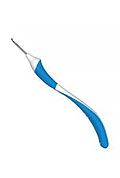
addi Swing hooks put the hook on a curved ergonomic handle that keeps the wrist straight — the hook for anyone who crochets for hours or whose hand aches — in every size from the finest steel (0.5 mm) to L (8 mm). addi Comfort Grip hooks have a softer, straight handle, in A, C, E and J. Crystal Palace bamboo hooks are light and warm with a little grip on the yarn. The crochet hooks shelf has them by size. For the yarn, cotton crochets crisply and shows stitch definition — the cotton shelf — and the worsted shelf is where most blanket and amigurumi yarn lives.
Which of our yarns crochet best
A hook wants a yarn that will not split when the hook goes through it, which means a plied, smooth, firmly spun strand. The singles that knitters love — Malabrigo Worsted, Woolstok Light, Reggae — catch on the hook and come apart, and a brushed mohair cannot be frogged at all. From our shelves, the ones that behave:
For blankets and anything washable: HiKoo Simplicity and Simpliworsted, the merino-acrylic blends that go through the dryer, on a G to I hook; Plymouth Worsted Merino Superwash and Malabrigo Rios, plied superwash merinos, on an H or I. For dishcloths, bags and amigurumi: Blue Sky Organic Cotton and Brown Sheep Cotton Fleece, which hold a crisp stitch, on a G or H — and a size or two smaller for amigurumi, as above. For garments: Brown Sheep Nature Spun Worsted and Prairie Spun DK, the smooth three-plies that do not split, and Juniper Moon Cumulus, whose blown construction keeps a crocheted summer top from weighing a pound; Zooey for a drapey summer shawl. For colorwork and tapestry crochet: Nature Spun again, for the color card.
Self-striping yarn stripes narrower in crochet than in knitting, because each row uses more yarn, so a sock yarn's stripes come out about two-thirds as tall; a long-gradient yarn such as a Zauberball does not care and makes a fine crocheted shawl. The self-striping guide has the mechanism.