Why put nylon in cotton
Cotton fiber is strong, cool and absorbent, and it has two faults as a knitting yarn: it is dense, so a cotton sweater weighs half again what a wool one does, and it has no elasticity, so ribbing sags and a hem stretches and stays stretched. Spinning cotton loosely to lighten it makes it weaker and makes it pill.
Nylon solves the second fault directly — it is elastic and strong, and a small percentage gives the yarn some recovery — and it makes a solution to the first fault possible. A mill can knit a fine nylon tube and blow short cotton fibers into it, so the yarn is a soft cotton core held in a nylon net. That is a blown or chainette yarn, and it is why Juniper Moon Cumulus is 94% cotton yet lighter than any spun cotton on the shelf.
Cumulus, by the numbers
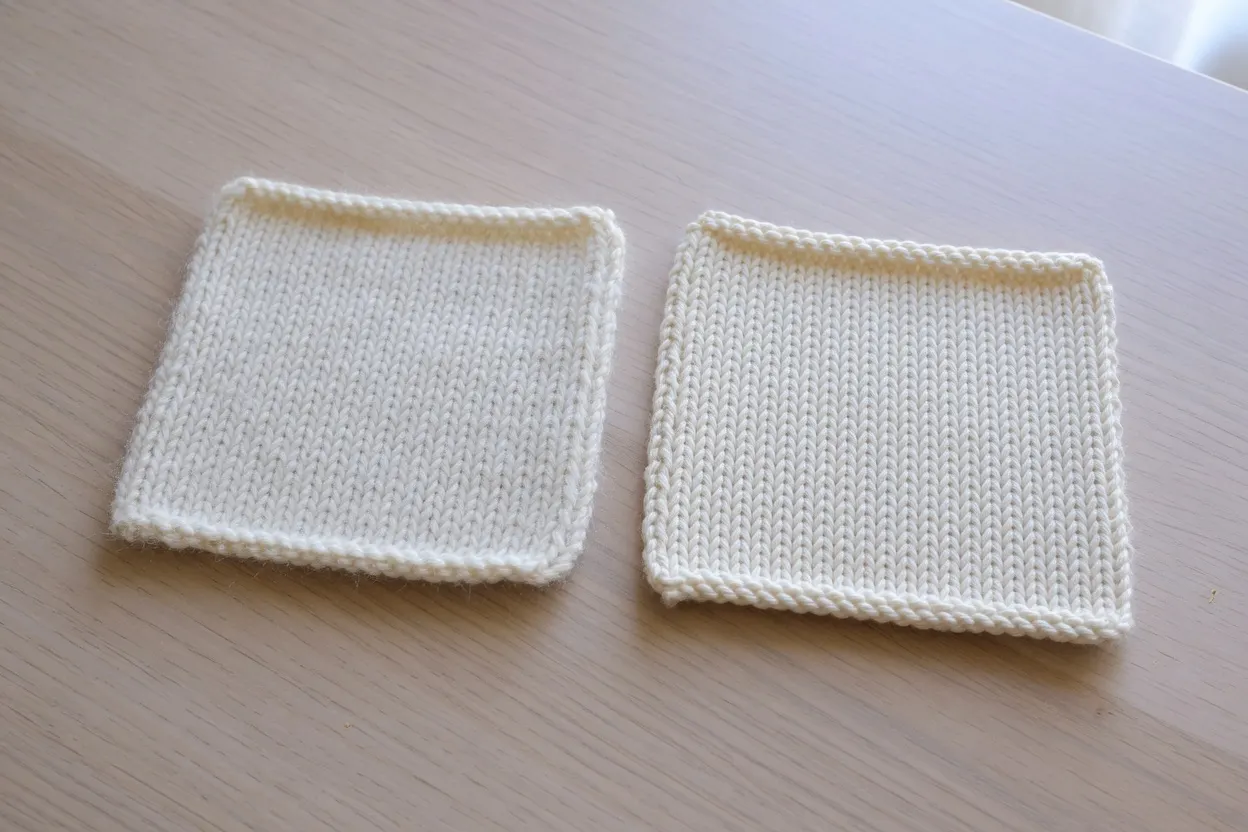
Cumulus is Mako cotton blown into 6% nylon. A 100 g skein holds 248 yards at a worsted gauge of 4 to 5 stitches to the inch on US 7 to 9. Blue Sky Organic Cotton, a spun 100% cotton at the same gauge, holds 150 yards to 100 g. So a sweater of the same size weighs about 60% as much in Cumulus, and takes fewer skeins:
| 40" worsted pullover, about 1,100 yd, plus a spare skein | Skeins | Weight | Cost |
|---|---|---|---|
| Juniper Moon Cumulus | 6 | 600 g | $147 |
| Blue Sky Organic Cotton | 9 | 900 g | $175.50 |
That lightness is the point. A Cumulus tee or summer cardigan hangs without dragging at the shoulders, and a baby blanket in it is cool and washable without being heavy on the child. The fabric is soft and a little spongy, with a matte, slightly brushed look; it is not a crisp, stitch-definition cotton. It is hand wash and dry flat on the band, and like all cotton it blocks flat and holds the shape you dry it in.
It comes three ways. Cumulus is 35 solid colors. Cumulus Rainbow is the same yarn dyed in long stripes, so a plain tee comes out banded with no color changes to weave in; the bands come out wider on a sleeve than across a body, which the self-striping guide explains. Cumulus Matisse puts several colors into one skein in short runs, a variegated effect rather than stripes, best in plain stockinette where the colors can mix.

The other cotton-nylon blends
Berroco Remix Light is the budget DK: a blend of cotton, nylon, acrylic, silk and linen made from recycled fiber, 432 yards to 100 g at 20 stitches to 4" on a US 5, machine washable, $13.85. A sweater in it is three or four skeins. It knits into a light, slightly tweedy fabric that drapes well and never felts.
Berroco Sesame is a self-striping worsted that is mostly wool and acrylic with cotton and nylon, superwash and machine washable — a striping yarn for hats and kids' sweaters rather than a cotton in character.
HiKoo CoBaSi is the summer sock yarn: cotton, bamboo and silk with elastic nylon, so it stretches like a wool sock without any wool. We are down to the last color of it; the sock yarn shelf has the wool blends.
The self-striping cottons
If you came for cotton that stripes itself, there are five on our shelves, in two families.
Long, clean stripes. Cumulus Rainbow at worsted, Juniper Moon Zooey Stripes at DK (60% cotton, 40% linen, 284 yards, machine washable) and Araucania Prisma at DK (linen, cotton and viscose). Each color runs for yards before the next, so a wide piece gets bands an inch or two deep and a narrow one gets deeper bands.
Marled, slow gradients. Schoppel Zauberball Crazy Cotton is 100% organic cotton built the Zauberball way: two singles, each changing color slowly and never at the same time, plied together, so the fabric is a soft marl that drifts from one color pair to the next over a whole project. 230 yards to 100 g at 5 stitches to the inch, hand wash, 11 colorways. Araucania Huasco Coton does something similar at fingering weight with hand-painted color, 481 yards to the skein.
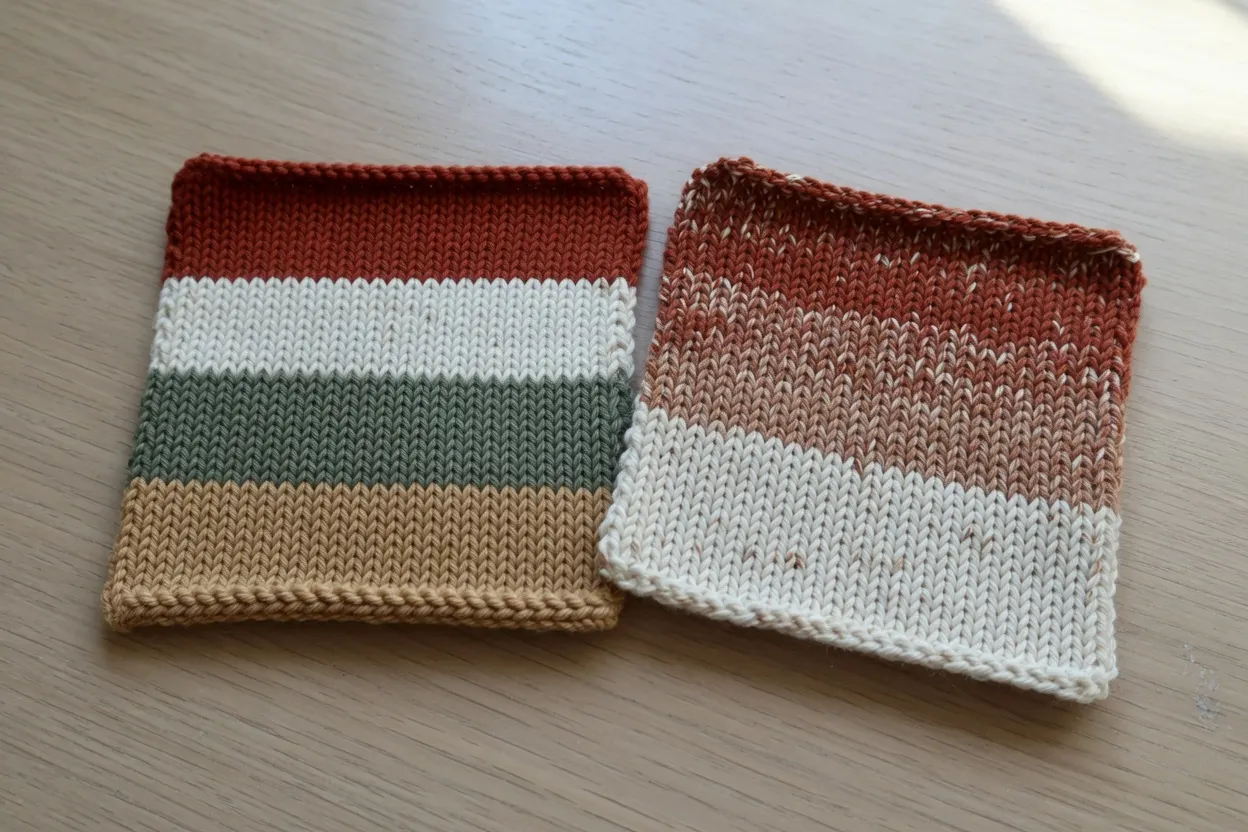
All of them want plain fabric: stockinette, garter, a simple rib. Lace and cables fight the color. A shawl, a tee, a baby blanket or a cowl shows them best.

Knitting and washing cotton blends
Cotton grows. Knit a swatch, wash it, hang it for an hour with a clothespin or two on the bottom edge, and measure it then — that is the gauge your sweater will have after the first wear. Go down a needle size for anything fitted, and knit ribbing on a needle two sizes smaller than the body, or work the hem in garter or seed stitch, which sag less than rib. The nylon in these blends helps; it does not make cotton behave like wool.
Wash as the band says. Cumulus and Zauberball Crazy Cotton are hand wash, cool, dry flat. Remix Light, Zooey and Sesame go in the machine on a gentle cycle, then dry flat; a dryer shrinks cotton and sets the nylon's memory wherever it was lying. None of them felt, so a hot wash costs you size and shape, not the garment.
What we stock with cotton and nylon in it, by weight
- Fingering: HiKoo CoBaSi (sock), Araucania Huasco Coton (self-striping, no nylon).
- DK: Berroco Remix Light; and the cotton-linen Zooey, Zooey Stripes and Zooey Spray, which are machine washable without any nylon.
- Worsted: Juniper Moon Cumulus, Cumulus Rainbow and Cumulus Matisse; Berroco Sesame.
The cotton shelf has every cotton line, and the summer yarn guide puts them next to the linens.

